Daily Routines
Everyday routines happen again and again.
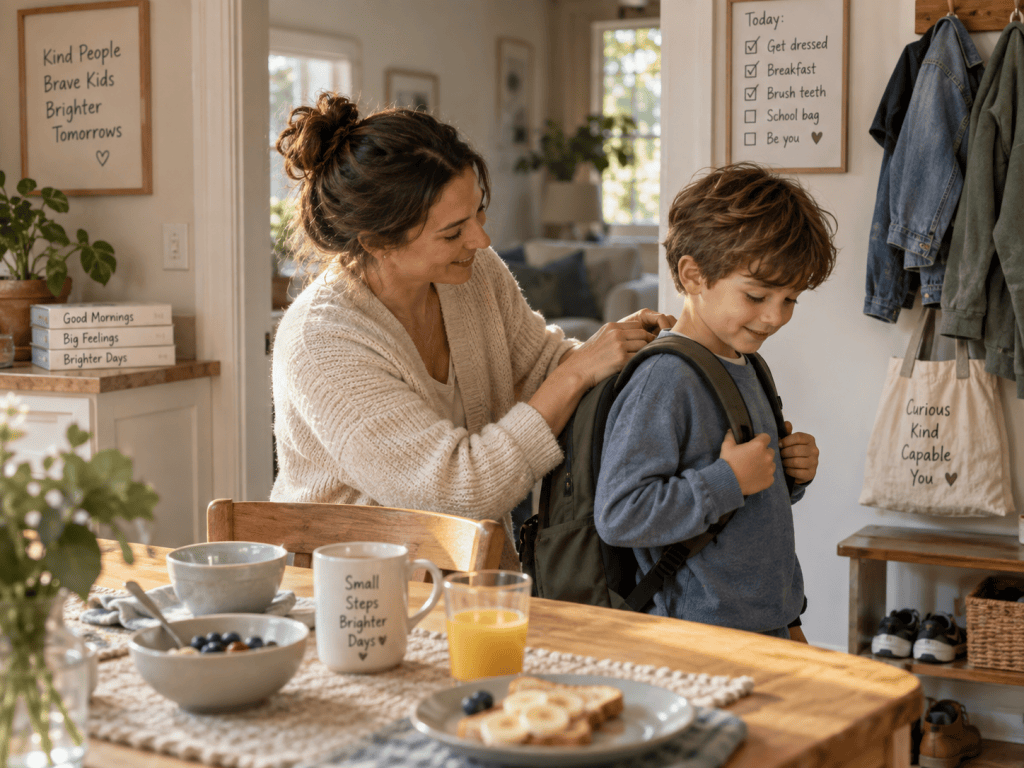
Getting ready in the morning. Getting dressed. Brushing teeth. Eating. Coming home from school. Going to bed.
When these routines are difficult, families can end up giving the same reminders over and over.
Sometimes the first step is simply to make the routine clearer, smaller and more predictable.
Choose the routine you want to work on.
Why routines can feel difficult
A routine that seems simple may actually contain many small steps.
Your child may need help knowing:
- what to do
- what order to do it in
- what happens next
- when the routine is finished
Instead of adding more instructions, it can help to make some of that information visible.
A picture, checklist, short visual sequence or First-Then support may be enough.
Choose a Daily Routine

Morning Routine
Make waking up, getting ready, breakfast and leaving home more predictable.

Getting Dressed
Support choosing clothes, following the dressing sequence and participating more independently.

Brushing Teeth
Make the steps of brushing teeth easier to see, understand and follow.

Mealtimes
Support greater predictability and participation around eating and family meals.

After-School Routine
Make the transition from school to home clearer, including unpacking, changing clothes and settling in.

Bedtime
Create a clearer sequence for winding down and getting ready for sleep.
A Simple Way to Start
You do not need to redesign the whole routine.
1. Pick one part that regularly gets stuck.
For example: putting on shoes.
2. Decide what you want to make easier.
For example: needing fewer repeated reminders.
3. Try one support.
For example: socks → shoes → bag → door.
Use it consistently for a while and notice what changes.
Make the routine clearer. Start with one step. Adjust as you go.

One Routine at a Time
A support that works during one routine may also help somewhere else.
A visual sequence used for getting dressed might later help with brushing teeth or bedtime.
You are building familiar ways for your child to understand everyday life — not starting from zero every time.