A calm and practical set of visual supports to help children learn waiting, turn taking, and what to do while they wait.
Overview
Waiting and turn taking are skills that often need to be taught clearly and practised with support.
This set of visual supports helps children understand what waiting can look like, what turn taking means, what they can do while they wait, and how to feel more supported during short waits. These visuals are designed for home, school, and therapy settings, and work best when introduced during calm moments and used consistently over time.
Waiting Visual Supports
A focused visual support set that helps children understand what waiting means, how long they may wait, and what they can do while waiting.
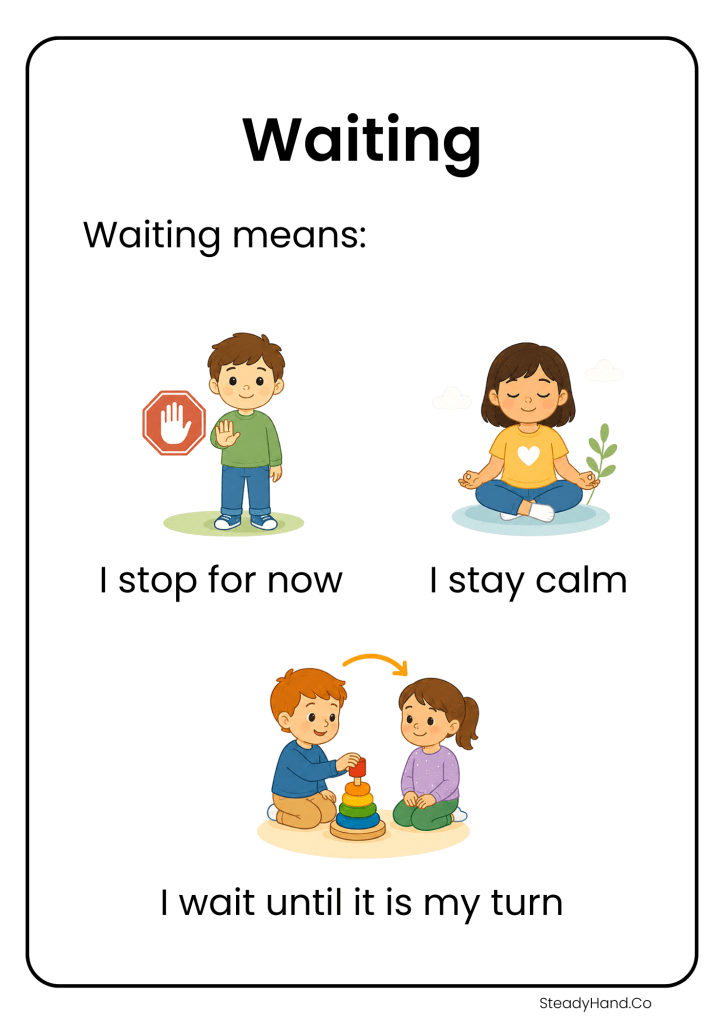
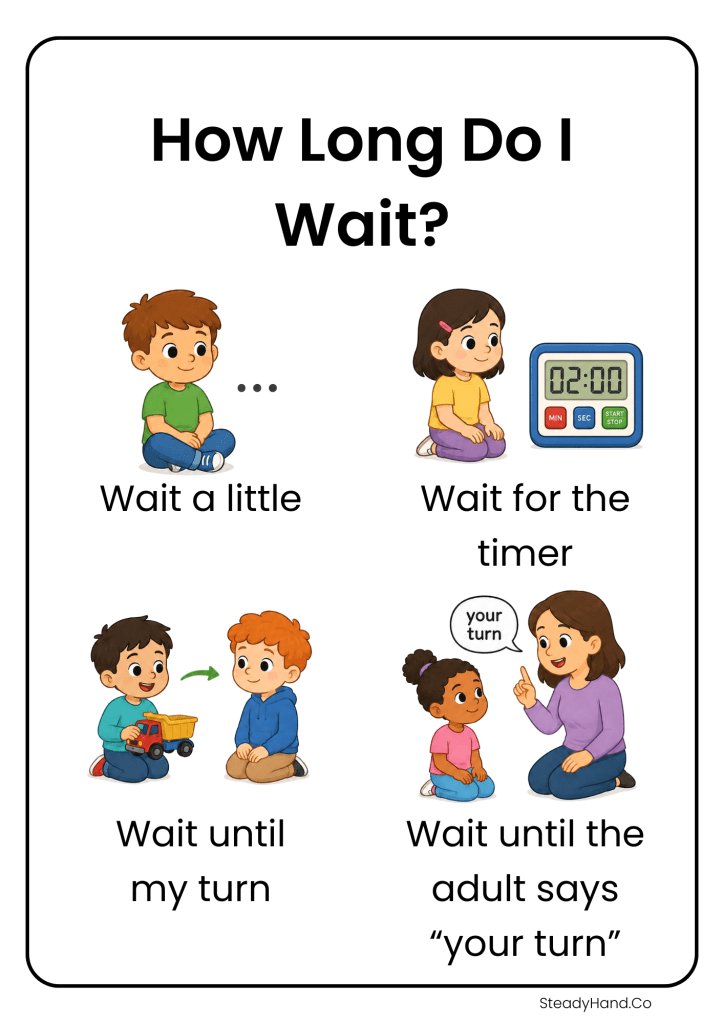
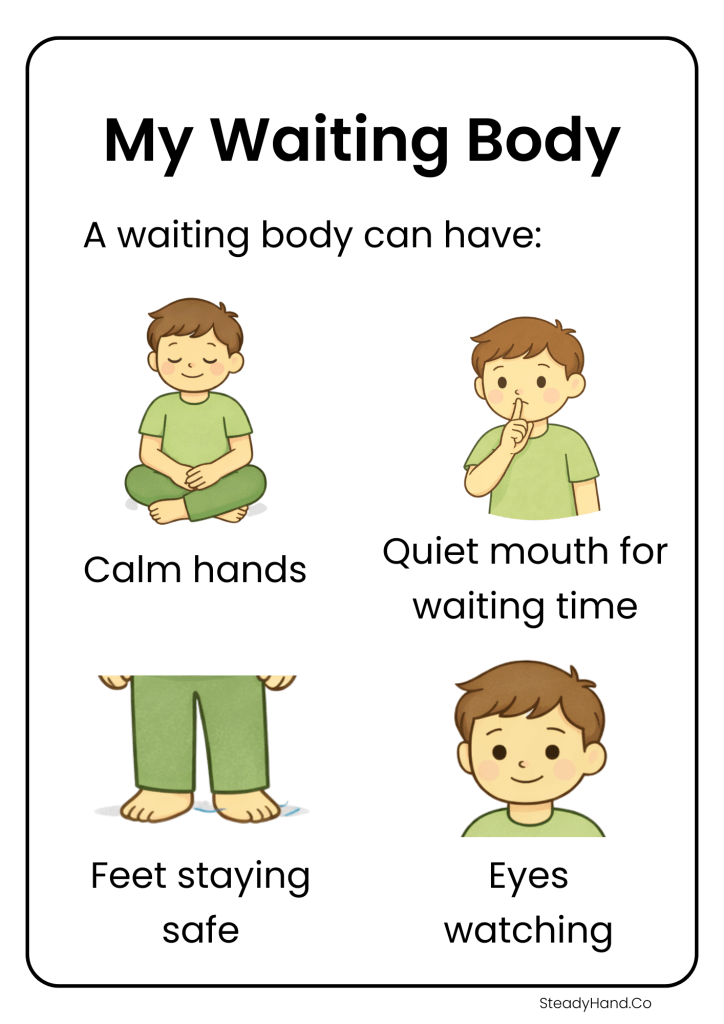
What’s Inside
- Waiting
- How Long Do I Wait?
- My Waiting Body
- While I Wait, I Can
- Waiting Reminder
Best For
Helpful for children who find waiting hard, feel unsure during short waits, or need visual support for what to do while waiting.
Price: $4.90
Turn Taking Visual Supports
A simple visual set that helps children understand taking turns, waiting for someone else, and seeing that turns can go back and forth.
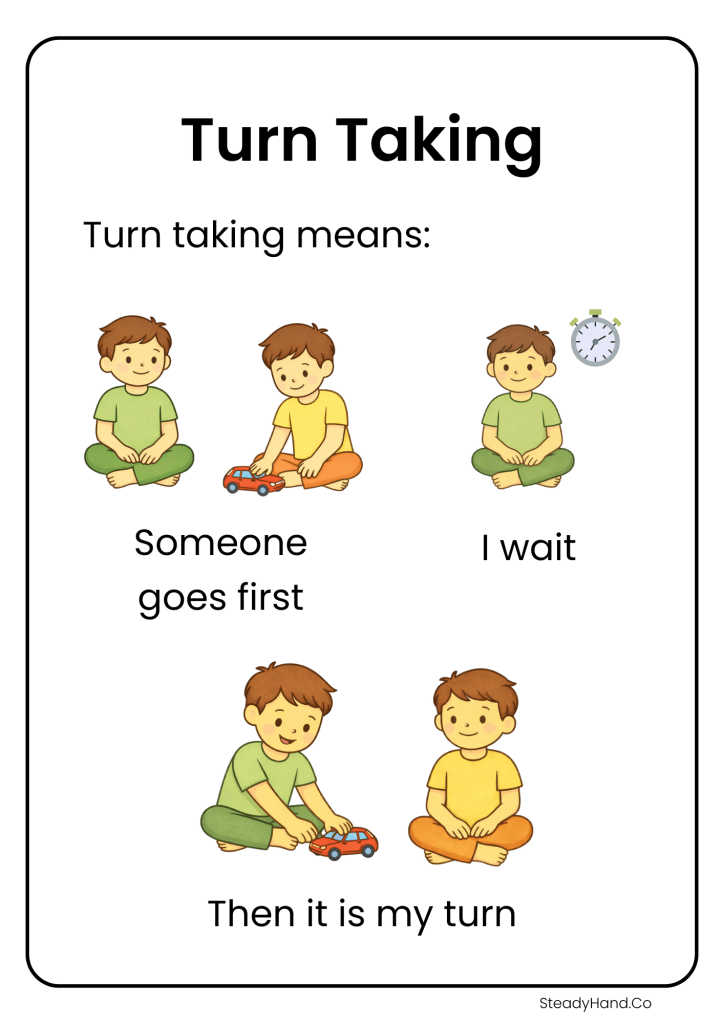
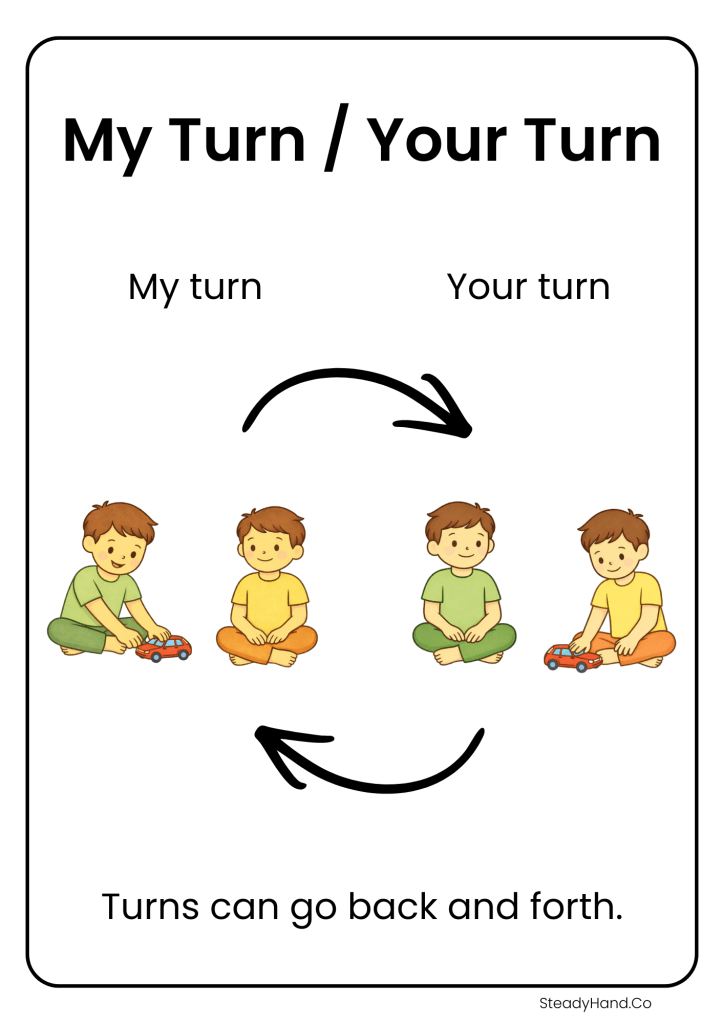
What’s Inside
- Turn Taking
- My Turn / Your Turn
Best For
Helpful for children learning to share turns during play, routines, or adult-guided activities.
Price: $2.90
Who It’s For
These resources may be helpful for:
- children who struggle with waiting
- children learning to share turns
- children who need support knowing what to do while waiting
- adults teaching early participation and play skills
- parents, teachers, and therapists who want calm, visual support for these everyday challenges
How This Can Help
These supports can help children:
- understand what waiting means
- know what may happen next
- learn what to do with their body while they wait
- understand simple turn-taking patterns
- feel more supported during short waits
- build waiting skills over time through repeated practice
The goal is not to expect long waits too quickly. The goal is to make waiting and turn taking more understandable, manageable, and successful.
How to Start Using It
Start small.
Introduce these visuals during calm moments, not during a difficult wait.
A simple progression could be:
- begin with Waiting
- add How Long Do I Wait?
- use My Waiting Body and While I Wait, I Can
- introduce Turn Taking
- add First Wait, Then My Turn examples once the child is ready
Use short, simple phrases such as:
- “Wait.”
- “My turn, then your turn.”
- “Your turn is coming.”
- “You can wait with calm hands.”
Prompting Support
Start with the least amount of help the child needs.
You might begin with:
- modelling what waiting looks like
- pointing to the visual
- gesturing to where the child can sit, watch, or wait
- verbal prompting using short, calm phrases
- light physical guidance only if needed
Over time, reduce prompts as the child becomes more familiar with the visuals and expectations.
The aim is not perfect waiting. The aim is helping the child understand the process and experience small successes.
Flexible Ways to Use It
You can use these supports in different ways depending on the child and the situation:
- display one page at a time
- use the waiting pages on their own
- use the turn-taking pages during play
- use first-then example pages for motivating activities
- place the reminder page where the child often waits
- pair the visuals with a timer, visual cue, or adult reminder
Format
These are digital downloads.
No physical product will be shipped.
You can print the pages you need, laminate them if preferred, and use them in home, school, or therapy settings.
One Step At A Time
Waiting is a skill, and skills take practice.
Start with very short waits. Keep the expectations clear. Help the child know what they can do while they wait.
Small successes, repeated often, can build stronger waiting skills over time.
You May Also Find These Helpful
Token Boards & Reward Supports
Helpful for children who need extra motivation while building waiting skills.
Behaviour Support Visuals
Helpful for children who need clear reminders for body safety, listening, and participation.
Voice Levels Visual Support
Helpful for children learning what kind of voice fits different places and moments.
 Steady Hands Co